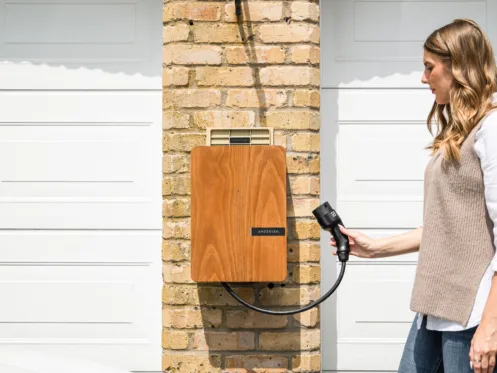
Electric vehicle ownership has grown steadily across Will, DuPage, and Cook Counties over the past several years, and with that growth has come one of the most common questions homeowners ask when they start planning a home charging setup: does this mean I need a whole new electrical panel? It’s a fair question, and the honest answer is that it depends less on your panel’s age and more on a specific calculation most homeowners have never heard of.
The Question Isn’t “How Old Is My Panel?”
It’s tempting to assume that an older panel automatically can’t handle an EV charger, or that a newer one automatically can. Neither assumption is reliable. A 15-year-old 200-amp panel with modest existing demand may have plenty of room for a Level 2 charger. A newer panel in a home already running central air, an electric range, a whole-home generator transfer switch, and a finished basement’s worth of circuits might not have any room left at all.
What actually matters is your home’s total electrical load compared to your panel’s rated capacity, and how much of that capacity is already committed to existing circuits. This is where a licensed electrician’s assessment becomes genuinely necessary rather than a formality. Under the National Electrical Code, a dedicated EV charging circuit has to be sized with margin built in. Article 625.41 of the 2023 NEC specifically requires the branch circuit for electric vehicle charging equipment to be calculated at 125% of the equipment’s maximum load, not the load itself. In practical terms, that means a charger rated for a continuous 40-amp draw needs a circuit and breaker rated for 50 amps, not 40. That margin exists because EV charging is considered a continuous load, and continuous loads run for long, uninterrupted stretches that generate more sustained heat than something like a dishwasher or a hair dryer.
What an Electrician Is Actually Calculating
When you call an electrician for an EV charger installation, the visit isn’t just about finding an open breaker slot. A proper assessment involves a load calculation that accounts for every major circuit already in your panel: your HVAC system, water heater, kitchen appliances, and anything else drawing significant current. From there, the electrician determines whether adding the EV circuit’s required capacity, with that 125% continuous-load margin factored in, pushes your total demand past what your panel and service entrance can safely deliver.
If there’s room, you may only need a new dedicated circuit run from the panel to your garage or driveway, along with the correct breaker and, depending on your specific charger and local code, a GFCI protection requirement under NEC Section 625.54 for the outlet or hardwired connection. If there isn’t room, the conversation shifts to what a panel upgrade would actually involve: typically a move to 200-amp service if you’re not already there, which creates headroom not just for the charger but for future additions like a heat pump, a home office, or expanded circuits.
This is also where “electrician near me” searches tend to produce wildly different answers depending on who you call. Some contractors will quote a panel upgrade automatically because it’s the safer default recommendation without doing the calculation. Others will skip the load calculation entirely and just find an open slot, which can result in a circuit that technically works day one but trips under sustained load or creates a genuine safety issue over time. Neither approach is what you actually want. You want the calculation done correctly, with an honest answer about whether your existing panel has the room or whether an upgrade makes sense.
Signs Your Panel Might Already Be Telling You Something
Even before you add an EV charger to the equation, certain signs suggest your panel is already working harder than it should be. Breakers that trip during normal use, especially on circuits that never used to be a problem, are one of the clearest indicators. Lights that dim noticeably when a major appliance kicks on are another. A panel that’s still running fuses instead of circuit breakers, or one that shows visible corrosion, discoloration, or heat damage, needs attention regardless of whether an EV charger is part of the plan. Any of these symptoms are also a reason to call for electrical repair sooner rather than later, since a panel under chronic stress doesn’t tend to improve on its own.
If you notice a burning smell, persistent buzzing from the panel, or a breaker that won’t reset at all, that’s not a wait-and-see situation. That’s a call for an emergency electrician immediately, before you add any new load to the system, EV charger or otherwise.
What to Expect From the Installation Itself
Once the load calculation is done and the path forward is clear, whether that’s a straightforward new circuit or a full panel upgrade, the physical installation process is fairly predictable. A qualified EV charger installer will run the new circuit from the panel to the charging location, install the correctly rated breaker and wiring, mount and connect the charging equipment itself, and test the full circuit under load before calling the job complete. If a panel upgrade is part of the scope, that work typically requires a brief power shutoff during the swap and a permit and inspection through your local municipality, which protects you as the homeowner by confirming the work meets current code before it’s buried behind a wall or covered by a panel door.
Financing is often available for panel upgrade projects specifically because the cost can catch homeowners off guard when it wasn’t part of the original EV charger budget. It’s worth asking about upfront, rather than discovering the number for the first time on an invoice.
The Bottom Line Before You Call Anyone
If you’re planning an EV charger installation, the right first step isn’t guessing based on your panel’s age or the number of open slots you can count yourself. It’s a proper load calculation from a qualified electrician who can tell you, with actual numbers, whether your existing service has the capacity or whether an upgrade is the smarter long-term move. That answer protects your home’s electrical safety today and gives you room to grow into whatever comes next, whether that’s a second vehicle, a heat pump, or simply the ordinary electrical demand of a modern household that keeps expanding year after year.
TR Miller Heating, Cooling, Plumbing & Electrical performs load calculations, EV charger installations, and panel upgrades for homeowners throughout the Chicago western suburbs. If you’re planning a charger installation, dealing with a panel that’s already showing warning signs, or just want an honest answer about what your home’s electrical system can actually support, reach out to schedule an assessment.
Author