Sewer Repair Services for Chicago Suburbs
Sewer line repairs can be necessary from time to time in order to keep the pipes working as they should. Tree roots can puncture the pipes, and debris from your home can sometimes lead to clogs that will need to be addressed as quickly as possible to minimize further damage. The problem with sewer lines, though, is that they are underground, so it can sometimes be challenging to identify when there is an issue.
When the functionality of your home’s plumbing system is in question, fixing the problem right away becomes your top priority. While most homeowners in Chicago’s suburbs understand the importance of maintaining their property, some may not realize this also includes ensuring that their sewer systems remain in top-notch condition. Repairing main sewer lines is a critical service that addresses problems within the pipelines that carry waste away from your home, ensuring a clean, safe, and odor-free living environment.
Recognizing the signs that you need a repair is essential to preventing more significant, costly problems down the road. Timely repairs not only save you money but also protect the value of your property. If you’re experiencing drain or sewer problems, contact our local experts right away.
Signs You Have a Sewer Line Problem
By recognizing the signs of potential issues and acting promptly, you can ensure that your home remains clean, safe, and free from unexpected sewer disruptions. Remember, when it comes to your sewer lines, preventative care is key, and professional help is invaluable:
Signs to Look For
- Recurring pipe blockages
- Sewage backup in home
- Foul odors coming from drains
- Gurgling sounds in pipes
- Unexplained lush patches in your lawn
Sewer Line Repairs vs. Sewer Line Replacements
While your sewer line should have a long life expectancy, certain factors can cause it to malfunction sooner than expected. This can include installation errors, poor soil conditions, tree roots infiltrating the line, and flushing the wrong items down the toilet.
If you start to notice an increase in clogged or slow drains, it could signal you need to install a new line. Ask our experts at TR Miller Heating, Cooling, Plumbing & Electrical to inspect the line and help you determine the best course of action.
Repairing Main Sewer Lines in Chicago’s Suburbs
Homeowners are generally responsible for maintaining the main sewer line from their house up to the point where it connects to the municipal sewer system. Understanding this responsibility can help ensure you take the proactive measures necessary for maintenance and promptly address issues when they arise.
Generally, main sewer lines are robust, but they can be susceptible to damage depending on the material they are made of. Older homes with main sewer lines composed of clay or cast-iron may experience issues more frequently, highlighting the need for timely intervention and possible repairs.
Environmental factors are significant contributors to the health of your sewer lines. Tree roots, naturally drawn towards sources of water, can infiltrate and cause extensive damage to your sewer pipes, leading to serious blockages and potential backups.
This is especially pertinent to homeowners in Chicago’s suburbs, where diverse tree species are prevalent. Scheduling regular check-ups with professionals is a proactive step in identifying and addressing these issues early, ensuring your main sewer lines remain in optimal condition.
The weather can also impact your sewer lines. Extreme temperature fluctuations can cause the ground to shift, potentially damaging the pipes underground. Being proactive and ensuring that your sewer lines are well-insulated can save you from the hassle of unexpected repairs.
How To Prepare for Sewer Line Repairs
When you schedule sewer line repair it’s important to know what to expect:
First, if they haven’t already, a technician will perform a sewer video inspection to see exactly what the problem is with your line, and where it is located.
Next, the professionals will likely mark the location of the issue above ground so they know where to focus. They will then look for utility lines or any other obstacles that are near the area.
Once the work begins, you should be prepared for a noisy repair. You will also not be able to flush anything down the toilet during the repairs, so you might want to make arrangements to stay somewhere else until the work is complete.
Depending on the extent of the damage to your sewer pipes, your plumber may be able to employ trenchless methods for completing the necessary repairs. This involves relining the pipes from the inside to seal any cracks or leaks without the need for digging up your yard. If the damage is extreme, though, your plumber may need to dig to gain full access to the pipe in question. During your initial consultation, they can let you know which method is most appropriate for your needs.

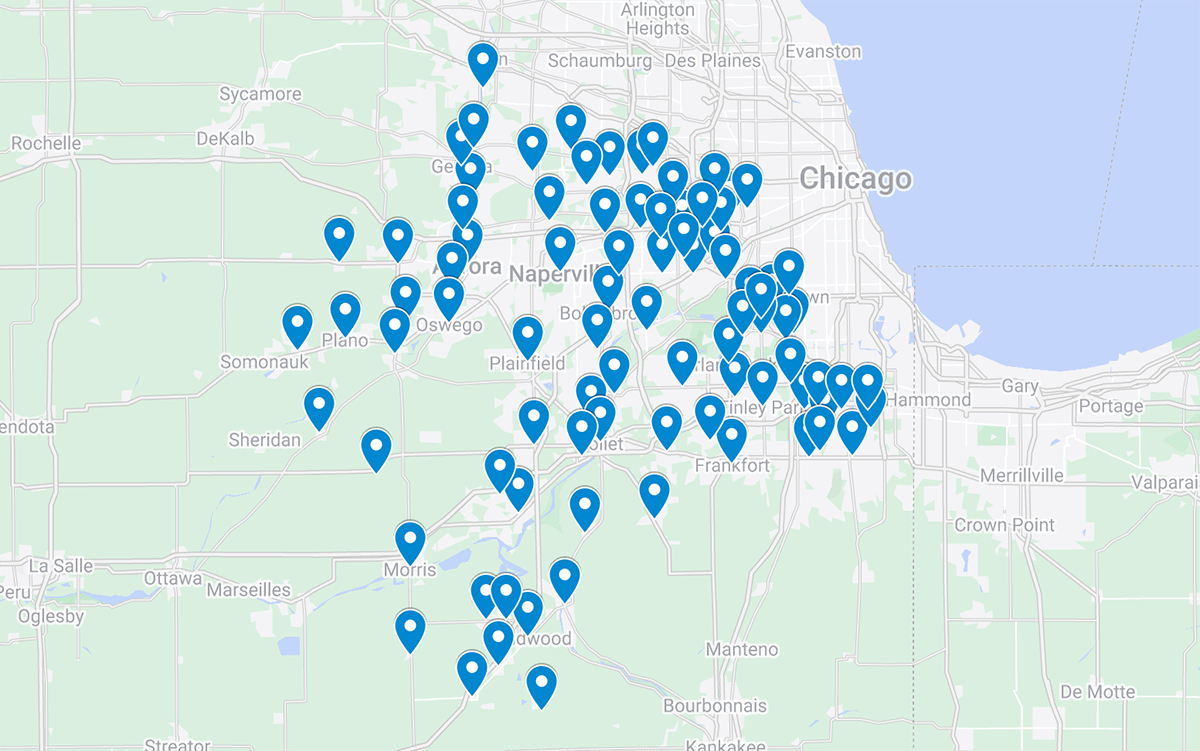
Providing the best sewer replacement services to homeowners in the Greater Chicago area. Proudly serving these cities and surrounding areas:
Q: What is sewer line repair and when is it needed?
A: Sewer line repair addresses damage or deterioration in the underground pipe that carries wastewater from your home to the municipal sewer system. Homeowners in the western and southern Chicago suburbs are responsible for maintaining the sewer lateral from their home to the municipal connection point — meaning repair costs fall to the homeowner rather than the village or city. Sewer line repair is needed when camera inspection reveals cracks, root intrusion, pipe deterioration, offset joints, or belly sections that are causing recurring backups, slow drains, or sewage odors. TR Miller uses high-definition sewer camera inspection to diagnose the specific cause and location of any sewer line issue before recommending a repair approach — ensuring homeowners receive an accurate assessment rather than a guess.
Q: What are the signs that my sewer line needs repair?
A: Common signs that your sewer line may need professional repair include: multiple slow drains throughout the home simultaneously — particularly when more than one fixture is affected at the same time; gurgling sounds from toilets or floor drains when water runs elsewhere in the house; sewage odors coming from drains, floor drains, or the yard above the sewer line path; water backing up into a tub or shower when you flush the toilet; unexplained wet or sunken areas in the yard directly above where your sewer line runs; and recurring main line backups that return shortly after clearing. A single slow drain is typically a localized clog. When multiple fixtures are affected or backups recur repeatedly, the cause is almost certainly in the main sewer lateral and warrants a professional camera inspection.
Q: What is the difference between sewer line repair and sewer line replacement?
A: Sewer line repair addresses specific damaged sections of an otherwise functional pipe — through methods such as pipe lining, spot repair, or targeted excavation and section replacement. Sewer line replacement involves removing and replacing the full lateral from the home to the municipal connection. Repair is appropriate when damage is localized, the overall pipe condition is serviceable, and the damage type is compatible with repair methods such as pipe lining. Replacement is appropriate when the line has deteriorated throughout its length, has collapsed sections, multiple offset joints, or is made of a material — such as clay tile — that has reached the end of its practical service life. TR Miller uses sewer camera inspection to determine which approach is appropriate for each specific situation and will never recommend replacement without first confirming through camera inspection that it is actually necessary.
Q: What is trenchless sewer repair and does TR Miller offer it?
A: Trenchless sewer repair is a category of sewer line repair methods that fix or replace a damaged sewer line from the inside without requiring full excavation of the pipe’s path. The most common trenchless method is cured-in-place pipe lining (CIPP) — a process in which a resin-saturated flexible liner is inserted into the damaged pipe, inflated, and cured in place to form a smooth, seamless new pipe within the existing one. The result is a structurally rehabilitated line that seals cracks, root intrusions, and minor joint offsets while restoring full flow capacity. Trenchless sewer repair preserves landscaping, driveways, and hardscaping that would otherwise be disrupted by open-cut excavation. TR Miller offers trenchless pipe lining for qualifying sewer lines and performs camera inspection first to confirm whether the specific pipe condition is compatible with a trenchless approach.
Q: How does sewer camera inspection help diagnose sewer line problems?
A: Sewer camera inspection uses a high-definition, self-leveling camera attached to a flexible cable that is fed through the sewer line from a cleanout access point. As the camera travels through the pipe, it transmits a live video feed that allows TR Miller technicians to see the interior condition of the sewer lateral in real time — identifying the exact location and nature of any damage, blockage, root intrusion, pipe belly, offset joint, or structural deterioration. TR Miller performs sewer camera inspection on every significant sewer repair call before determining the appropriate repair method. This eliminates guesswork, ensures the right repair approach is chosen for the specific problem, and allows TR Miller to provide an honest assessment of the line’s overall condition before any work begins.
Q: How does tree root intrusion damage sewer lines and how is it repaired?
A: Tree root intrusion is one of the most common causes of sewer line damage in the western and southern Chicago suburbs — particularly in established neighborhoods with mature trees whose root systems have had decades to spread. Tree roots are attracted to the moisture and nutrients inside sewer lines and enter through even hairline cracks in pipe joints. Once inside, roots expand over time — gradually restricting flow until they cause a complete blockage or structurally compromise the pipe wall. TR Miller diagnoses root intrusion through sewer camera inspection, which identifies the extent of infiltration and the condition of the pipe wall. Repair options depend on severity: minor root intrusion may be cleared through rooter service or hydro jetting and addressed with pipe lining to seal the entry points; severe root intrusion that has structurally compromised the pipe may require section replacement or full line replacement. For homes with known root intrusion history, TR Miller recommends annual main line cleaning to prevent roots from rebuilding to the point of blockage.
Q: Does TR Miller repair burst sewer pipes?
A: Yes. Burst or collapsed sewer pipes are among the most urgent sewer emergencies TR Miller responds to for homeowners in the western and southern Chicago suburbs. A burst sewer pipe — caused by extreme ground freezing and thawing cycles, shifting soil, vehicle traffic over the pipe path, or severe root intrusion — can cause immediate sewage backup and requires prompt professional response. TR Miller uses sewer camera inspection to confirm the location and extent of a burst or collapsed section before beginning repair. Depending on the location, severity, and surrounding pipe condition, repair may involve spot excavation and section replacement, trenchless pipe bursting to install a new pipe through the collapsed section, or a combination of methods. If you suspect a burst sewer pipe, contact TR Miller immediately! TruCare and TruCare+ members receive same-day emergency response when calling and booking before noon.
Q: How much does sewer line repair cost in the western and southern Chicago suburbs?
A: Sewer line repair cost varies based on several factors including the nature and severity of the damage, the location and depth of the affected section, the repair method used, whether excavation is required, and the length of pipe involved. Localized spot repairs using pipe lining are typically less expensive than open-cut excavation and section replacement. Full line replacement is the most significant investment but is sometimes the most cost-effective long-term solution when a line has deteriorated throughout its length. TR Miller provides upfront flat-rate pricing before any sewer repair work begins — you receive a clear quote based on what camera inspection reveals before a single tool is used. There are no hourly surprises and no after-the-fact additions. Call (815) 912-0028 or request a diagnostic visit online to receive a complete price for your specific situation.
Q: What is pipe lining and when is it used for sewer repair?
A: Pipe lining — also called cured-in-place pipe lining or CIPP — is a trenchless sewer repair method that rehabilitates a damaged sewer line from the inside without excavating your yard. A flexible liner saturated with epoxy resin is inserted into the existing pipe through a cleanout access point, inflated to press against the pipe walls, and cured in place to harden the resin. The result is a smooth, seamless new pipe formed within the old one — sealing cracks, closing root intrusion entry points, bridging minor offsets, and restoring full structural integrity and flow capacity. Pipe lining is appropriate when the existing pipe retains enough structural integrity to support the liner, the damage is distributed rather than concentrated in one collapsed section, and the pipe diameter and access points are compatible with the lining process. TR Miller performs sewer camera inspection first to confirm whether pipe lining is the right solution for the specific condition of your sewer lateral.
Q: How do I choose a sewer repair company in the western and southern Chicago suburbs?
A: When choosing a sewer repair company in the western and southern Chicago suburbs, look for professional plumbers rather than drain-only contractors, camera inspection as a standard part of the diagnostic process, upfront flat-rate pricing before any work begins, and a company that explains what they found and why before recommending a repair approach. TR Miller Heating, Cooling, Plumbing & Electrical provides professional sewer line repair throughout the western and southern suburbs with local plumbers, high-definition sewer camera inspection on every significant call, and transparent pricing with no hidden fees. As a full-service home services company covering plumbing, HVAC, sewer, and electrical under one roof, TR Miller can also address any related plumbing or electrical issues that surface during a sewer repair visit — eliminating the need to call a second contractor.