
Most homes in Plainfield are newer, but not all of them are. Walk through the Downtown Plainfield Historic District along Lockport Street and you will see houses from the 1840s through the 1960s, and many of them have been added onto, remodeled, and patched with new circuits over the decades. Wiring that was fine for a few lamps and a radio was never meant to run a modern kitchen, a home office, and a garage full of tools.
Rewiring is a big project, so it helps to know when it is worth considering. If your Plainfield home has aluminum wiring, damaged insulation, or circuits that have been extended again and again, a new wiring plan can make the whole system safer and easier to live with.
TR Miller Heating, Cooling, Plumbing & Electrical has served homeowners in the Chicago suburbs since 2008. Our electricians start with a walkthrough of your home, explain what we find, and put the plan and pricing in front of you before any work begins.
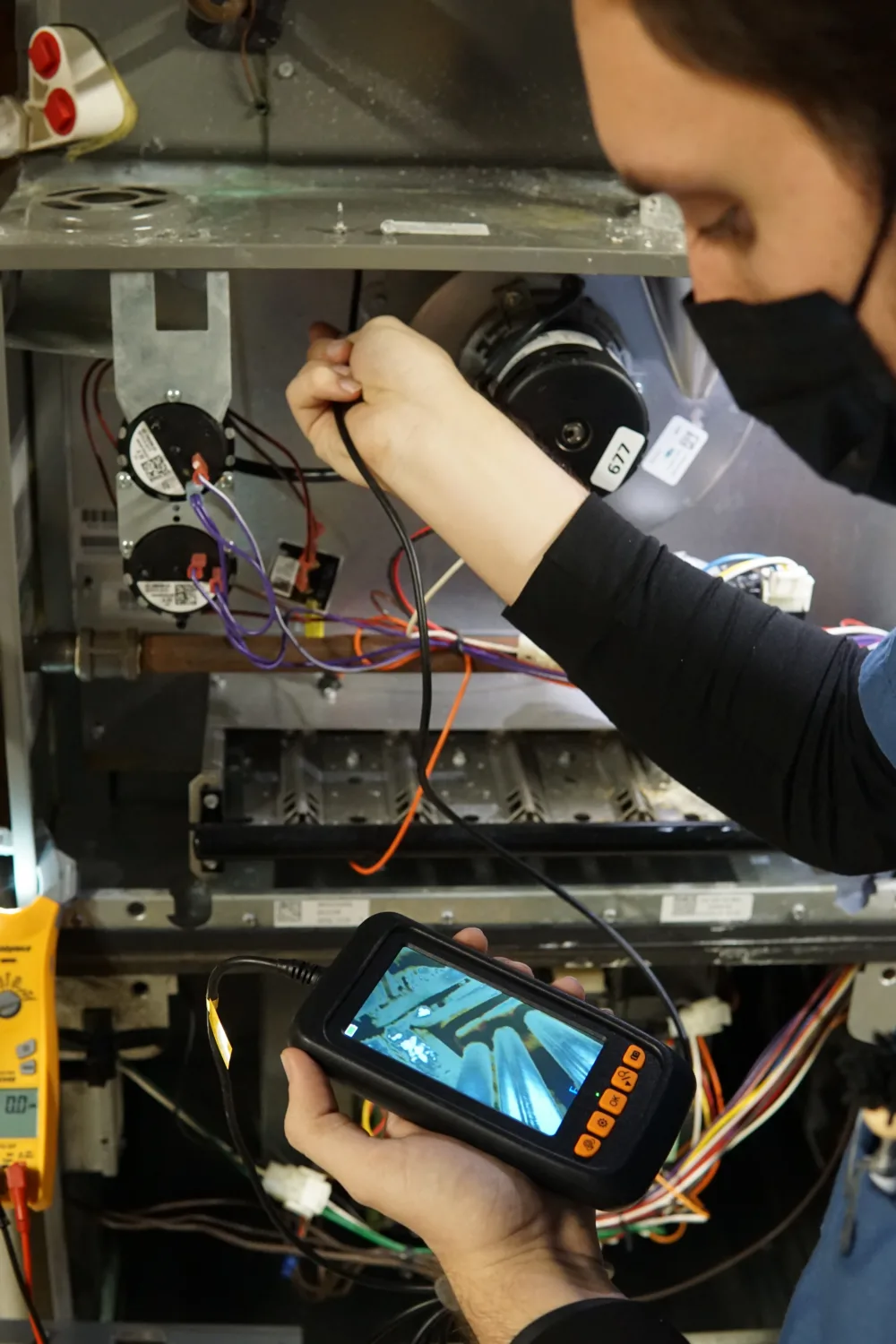
Signs Your Plainfield Home May Need Rewiring
Two things usually point toward rewiring: wiring that has simply aged out, and wiring that can no longer handle the way you use your home today. Watch for:
- Burning smells near outlets, switches, or the panel
- Flickering or dimming lights
- Buzzing sounds from outlets or switches
- Breakers that trip often
- Outlets that spark
- Switches, plugs, or cords that feel hot
- Light bulbs that burn out quickly
- Aluminum wiring
- Damaged or brittle insulation
Even without any of these signs, if your home’s wiring is 25 years or more old, it is worth having an electrician take a look. In Plainfield, that includes plenty of homes built in the 1990s that have had rooms finished, basements remodeled, or circuits added since.
The Dangers of Old Wiring
Old wiring can overload easily, and an overloaded circuit can overheat. Wiring that has deteriorated or been damaged is a fire risk, and exposed wires or loose connections can cause electrical shocks. According to the U.S. Fire Administration, residential electrical malfunctions caused 26,100 home fires in 2022, with 185 deaths, 850 injuries, and nearly $1.5 billion in losses.
Failing wiring can also damage electronics and appliances, including computers, which can mean lost data.
Why Plainfield Homes Get Rewired
Plainfield’s housing is not uniform, and the reasons for rewiring vary by street:
- Older downtown and historic homes. Houses in and around the historic district may still have original wiring that was never meant for today’s loads.
- Additions and remodels. A finished basement, a new kitchen, or a second-story addition often means new circuits tied into older ones.
- Past DIY work. Splices, extension runs, and mismatched devices from earlier projects can be hard to spot until an electrician opens things up.
- Aluminum wiring. Some homes from the 1960s and 1970s were wired with aluminum, which needs specific attention at every connection.
What Is Involved in Rewiring Your Home
We begin by assessing your electrical needs and building a rewiring plan around them. We sit down with you, go over the plan, and answer your questions. From there the work generally includes:
- Removing the old wiring
- Updating the electrical panel as needed
- Installing new wiring and a grounding system
- Replacing outlets, switches, and fixtures
- Inspecting and testing the entire system
The timeline depends on the size and construction of your home, and we will walk you through it before work starts. Where it makes sense, we can talk with you about temporary power so you have as little disruption as possible.
Rewiring often goes hand in hand with other electrical work. If the plan involves a new service, take a look at our electric panel services. For a single failing circuit, see electrical repair, and for new circuits or outlets, see electrical installation. You may also want to ask about surge protectors for your new wiring, or start with an electrical safety inspection if you are not sure how much work your home needs.
Permits and ComEd in Plainfield
Whole-home rewiring requires a permit. The Village of Plainfield Building Department reviews electrical work under the 2020 National Electrical Code and the 2021 Village Building Code, and requirements can vary by project, so check with them at (815) 439-2937 for what applies to your home. Your electrician will explain which steps apply to your project and when inspections are needed.
Rewiring that involves a new or upgraded service may also involve ComEd, which serves Plainfield. For outages, you can reach ComEd at 800-334-7661.
Permits and Local Requirements
Some electrical work in Plainfield needs a permit. The Village of Plainfield Building Department can tell you what applies to your project. You can reach them at (815) 439-2937 or review the Village of Plainfield website. The Village uses the 2020 National Electrical Code with the 2021 Village Building Code. Our electricians will let you know if your project needs a permit.
If you lose power during a storm, ComEd handles outages at 800-334-7661.
TR Miller Is Your Plainfield Rewiring Partner
Our electricians are trained and experienced across electrical systems, and we handle rewiring from the first walkthrough to the final test. We offer clear pricing, and we keep your needs and budget in mind. We are a family-owned company, and we treat our customers like family. Your safety and comfort come first.
Ready to talk about rewiring your Plainfield home? Call us at (815) 912-0028.

Frequently Asked Questions
How do I know if my Plainfield home needs rewiring?
Common signs include burning smells, flickering lights, buzzing sounds, frequent breaker trips, sparking outlets, hot switches or cords, and bulbs that burn out quickly. Aluminum wiring and damaged insulation are also reasons to have it checked. If your wiring is 25 years or more old, an evaluation is a good idea even if nothing seems wrong.
How long does a whole-home rewiring project take?
It depends on the size of your home, the number of floors, the type of construction, and how much of the original wiring needs to be replaced. A single-level home with accessible attic and crawl spaces usually moves faster than a multi-story home with finished walls and ceilings. We walk you through a project-specific timeline before work begins.
Can I stay in my home during rewiring?
In most cases, yes, though power to sections of the home will be off at times while work is underway. We talk through the day-by-day power plan with you beforehand. Some homeowners choose to stay elsewhere during the busiest phases, especially with young children or a work-from-home setup.
Will rewiring mean cutting into my walls?
It can. Open framing in unfinished spaces needs no patching, while rewiring through finished drywall or plaster usually calls for small access cuts. We plan the work to keep those to a minimum, and we will explain what to expect for your home before we start.
Will my homeowner’s insurance require rewiring?
Possibly. Some carriers will not issue or renew policies on homes with knob-and-tube or aluminum branch circuit wiring, and some ask for an electrical inspection based on the home’s age. If your carrier has raised a concern, we can evaluate your system and provide a rewiring scope if one is needed. Check with your carrier about what documentation they require.
Does rewiring in Plainfield require a permit?
Yes. Whole-home rewiring requires a permit, and the Village of Plainfield Building Department can tell you what applies to your project. Call them at (815) 439-2937. Your electrician will explain the permit and inspection steps for your job.
Can I start with an electrical safety inspection?
Yes. If you are unsure how much work your wiring needs, an electrical safety inspection is a good first step. TruCare+ members get an annual 44-point electrical safety check as part of their plan.