A reliable air conditioning system is a necessity when summer temperatures rise across Plainfield, Bolingbrook, Tinley Park, and other surrounding Chicago suburbs. When an old cooling unit begins to fail, homeowners face an important financial decision: continue paying for repeated AC repairs or invest in trusted AC replacement for a brand-new air conditioner.
Understanding the technical factors of cooling infrastructure helps you make the most cost-effective decision for your household. This comprehensive guide breaks down the critical warning signs of a failing cooling unit, modern energy efficiency requirements, structural layout planning, and what to expect during a professional installation for your home’s AC unit.
The Warning Signs: When to Repair vs. Replace
Deciding whether to fix an existing air conditioner or replace it entirely comes down to safety, efficiency, and long-term costs. While minor issues can be solved with an expert AC repair, certain indicators prove that a system has reached the end of its functional lifespan.
The 5,000 Rule of HVAC
A reliable benchmark used by mechanical contractors is the “5,000 Rule.” Multiply the age of your cooling equipment by the estimated cost of the necessary repair. If the total exceeds $5,000, investing that money into a new air conditioning installation is the smarter economic choice. For example:
- A 12-year-old system needing a $450 compressor repair equals $5,400. Replacement is recommended.
- An 8-year-old system needing a $300 electrical component replacement equals $2,400. Repair is recommended. At TR Miller, our HVAC technicians will typically let homeowners know when their unit is nearing the end of their lifespan. That way, they can financially plan for an installation when the cost-savings for a new AC unit outweigh the “quick fix” which becomes needed more frequently.
When planning a home system upgrade, calculating your total AC replacement cost requires evaluating both the initial equipment price and the value of professional air conditioning installation.
Critical Visual and Auditory Red Flags
Beyond financial formulas, your equipment will physically show signs of terminal decline:
- Short-Cycling: If your condenser turns on and off rapidly every few minutes without completing a full cooling cycle, the compressor is overheating or failing.
- Uneven Temperature Distribution: A failing system loses the static pressure required to push conditioned air evenly across multi-story homes, leaving upper levels hot and humid.
- Unusual Noises: Squealing, grinding, or loud metal-on-metal clanking sounds indicate failed motor bearings or a broken compressor piston.
- Escalating Energy Costs: If your monthly utility bills spike during the summer while your cooling habits stay the same, the mechanical efficiency of the system has permanently degraded.
Understanding AC Sizing and SEER2 Energy Efficiency Standards
Investing in a new air conditioner involves more than simply picking a unit out of a catalog. Proper engineering calculations and an understanding of modern regulatory standards are essential to maximizing your home comfort.
The Danger of Improper Equipment Sizing
An air conditioner must be precisely sized to match the square footage, layout, and insulation values of your home.
- Systems that are too small will run continuously without ever reaching your target thermostat setting, causing premature wear and early system failure.
- Systems that are too large will cool the home too quickly and shut off before removing moisture from the air. This results in a cold, clammy, and humid indoor environment that encourages mold growth.
Professional technicians utilize an ACCA Manual J Load Calculation to determine the precise cooling tonnage your home requires, factoring in window placement, ceiling heights, and regional climate conditions.
Deciphering Modern SEER2 Ratings
The efficiency of residential cooling equipment is measured by the Seasonal Energy Efficiency Ratio 2 (SEER2). This updated regulatory standard tests equipment under realistic structural pressures.
- Modern entry-level air conditioners typically start at 13.4 or 14.3 SEER2.
- High-efficiency variable-speed cooling units can exceed 20+ SEER2.
Upgrading an old, degraded 10 SEER system to a modern high-efficiency unit can slash your summer cooling electricity consumption by up to 30% to 50%. This directly lowers your monthly household operating costs.
The Professional Installation Process: What to Expect
A seamless air conditioner installation requires careful mechanical execution. Knowing what happens on installation day helps homeowners prepare their property and understand the value of expert workmanship.
Phase 1: Property Preparation and Safe Evacuation
Technicians protect your flooring with drop cloths and isolate the work areas. The old, remaining chemical refrigerant inside your existing unit is safely evacuated into EPA-approved containment cylinders. The old electrical disconnects and the heavy exterior condenser pad are then completely uninstalled.
Phase 2: Structural Adjustments and Line Set Flushing
A new, leveled composite or concrete equipment pad is installed outside to keep the condenser stable. Technicians inspect the copper refrigerant lines that run between your indoor evaporator coil and outdoor condenser. These lines are thoroughly flushed with specialized chemical cleansers to remove old carbon, acid, or oil residues that could contaminate the new machine.
Phase 3: Component Integration and Electrical Calibration
The new indoor evaporator coil is mounted directly onto your furnace or air handler setup, and the outdoor condenser is anchored into place. New electrical whips, heavy-duty disconnect boxes, and condensation drain lines are safely routed and connected.
Phase 4: The Deep Vacuum Pressure Test
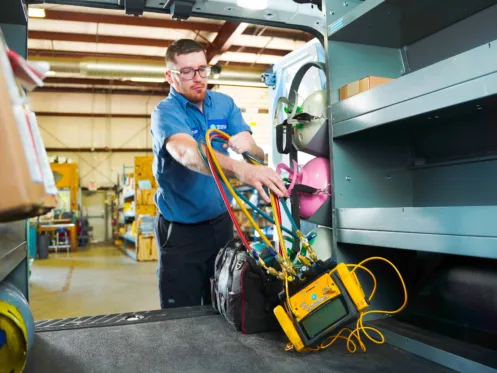
Before any fresh refrigerant is introduced, a specialized vacuum pump is connected to pull the entire system down below 500 microns. This deep vacuum test serves two vital purposes:
- It proves the line connections are 100% airtight and leak-free.
- It boils off and extracts any invisible microscopic moisture trapped inside the lines, preventing internal component corrosion.
Phase 5: System Charging and Airflow Balancing
Once the vacuum test passes, the factory refrigerant is safely released into the closed system. Technicians test the system’s static pressure, measure the temperature drop across the indoor coils, and balance the airflow throughout the home to verify peak operating efficiency.
Local Chicago Suburb Considerations and Seasonal Planning
Residential mechanical systems in northeast Illinois face unique operating demands due to extreme seasonal swings.
Battling Regional Humidity
Summer weather across Plainfield, Bolingbrook, and Tinley Park frequently brings high outdoor humidity. Your air conditioner acts as a primary dehumidifier. Choosing a modern two-stage or variable-speed cooling unit allows the system to run at a lower, steadier capacity for longer periods. This continuous operation extracts maximum moisture from your indoor air without over-cooling your living spaces.
When summer humidity spikes across Plainfield, partner with a licensed air conditioning company that understands the unique load calculations required for northeast Illinois homes.
Smart Financial Timing
The best time to evaluate your cooling equipment is before a total system breakdown leaves your family stranded in a heatwave. Planning a proactive replacement during mild weather lets you research equipment types, compare features, and browse current manufacturer incentives without stress.
Frequently Asked Questions About Residential Cooling Systems
How long does a typical residential air conditioning unit last?
With routine professional maintenance and regular filter replacements, a standard central air conditioning system lasts between 15 to 20 years. Systems operating in regions with harsh winter conditions or high summer humidity may experience faster component degradation if left unserviced.
How often should I schedule professional central air conditioning service?
We recommend an annual optimization visit every spring to clear debris and check refrigerant pressures. This prevents any issues from leaving you and your loved ones stranded without AC in the height of summer – when your family needs air conditioning the most!
Can I replace just my outdoor AC condenser and keep my old indoor coil?
This is highly discouraged. Matching a new outdoor condenser with an old, mismatched indoor evaporator coil significantly reduces system efficiency, voids the manufacturer’s warranty, and risks damaging the new compressor due to improper pressure ratings.
What is the difference between a traditional central AC and a ductless mini-split?
Traditional central air conditioning relies on a central furnace blower and a network of hidden sheet-metal ductwork to distribute air site-wide. A ductless mini-split utilizes small, individual wall-mounted air handlers inside specific rooms connected to an outdoor compressor. This setup allows for precise, independent temperature control across localized zones without needing ductwork.
Take Control of Your Home Comfort Today
Don’t wait for your aging cooling system to break down during the hottest week of the summer. Proactive planning ensures your home remains safe, efficient, and perfectly conditioned all year long.
The expert team at TR Miller Heating, Cooling, Plumbing & Electrical provides homeowners throughout the Chicago western suburbs with live answers, cutting-edge diagnostic technology, and straightforward pricing with absolutely no hidden fees.
Take advantage of our current seasonal deals, including special incentives on comprehensive AC tune-ups, urgent AC repairs, and high-efficiency new air conditioner installations. Visit our Specials and Promotions Page to view our latest active coupons and discover flexible, approved-credit financing options designed to keep your home upgrade affordable.
Ready to secure a reliable, energy-saving upgrade for your household? Call our local service desk directly at 779-234-0782 or fill out our quick online scheduling form on our Contact Us Page to book your expert consultation today!
Author