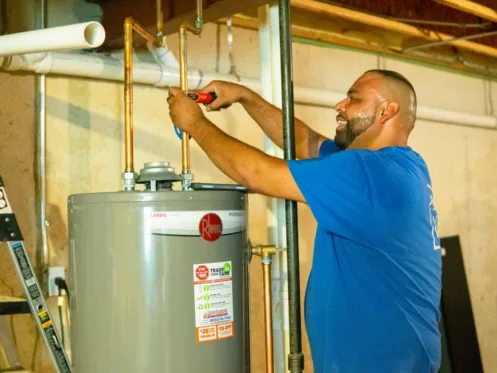
Your water heater probably worked fine in September. Then the first stretch of cold nights arrives, the showers get shorter, and the tank starts making noises it never made before. That might not be a coincidence! Winter puts more demand on a water heater than any other season, and a unit that was already on its way out tends to show it right when the whole household truly needs hot water the most.
This guide explains why cold weather is hard on water heaters, which warning signs are worth taking seriously, and how to decide between water heater repair and water heater replacement. It also covers when a tankless water heater is worth a look and what you can do this week to reduce the odds of a chilling cold-shower surprise!
Why Winter Is Harder on Your Water Heater
Water heaters do one job: raise the temperature of the water that comes into your home. In winter, that job gets bigger for three reasons.
The incoming water is colder. Water traveling through underground lines in cold weather arrives much colder than it does in summer. To deliver the same hot shower, your heater has to add more heat to every gallon. That means longer heating cycles, more wear on the burner or heating elements, and more strain on the tank.
Your household uses more hot water. Longer showers, more laundry, holiday cooking, and guests all add up. A tank that kept pace in summer can run out of usable hot water much sooner when demand rises.
Small problems stay hidden until they cannot. A slow leak, a worn part, or a layer of sediment can go unnoticed for months. Added winter workload is often what turns a minor issue into a teeth-chattering, no-hot-water morning.
Hard Water and Sediment: The Quiet Problem Inside the Tank
Many Chicago-area communities receive moderately hard water, which carries dissolved calcium and magnesium. Over time, those minerals settle at the bottom of a tank water heater as sediment. Check which water source your community uses if you are unsure, since hardness varies.
A layer of sediment acts like a blanket between the burner or element and the water. The heater has to work longer to do the same job, and the bottom of the tank can be overheated. That is why many people hear popping or rumbling when the heater fires. Left alone, sediment can reduce efficiency, shorten the life of the tank, and make a winter breakdown more likely.
Flushing the tank can clear some of that buildup, especially on a younger unit. If you would like to know how it works, read our guide to a water heater flush. If you see signs of hard water around the house, such as white scale on faucets or cloudy glassware, home water quality testing can show what is in your water and whether treatment makes sense.
Signs Your Water Heater May Not Last the Season
No single sign tells the whole story, but these are worth acting on before the coldest weeks arrive:
- Water around the base of the tank. A leak at the bottom can mean the tank itself is failing. A small puddle in October can become a large one in January.
- Rumbling, popping, or banging. Often a sign of sediment buildup. On an older tank, it may be hardened and harder to clear.
- Lukewarm or inconsistent water. Hot water that fades quickly or swings in temperature can point to a heating element, burner, or thermostat problem.
- Rust-colored hot water. Rust can mean corrosion inside the tank, though it can also come from elsewhere in the plumbing.
- Shorter hot showers. If the tank runs out faster than it used to, sediment or a failing component may be reducing capacity.
- Age. Most tank water heaters last about 8 to 12 years. If yours is in or past that range, plan ahead instead of waiting for it to fail.
If you notice any of these, call a professional plumber at TR Miller before the first deep freeze. A short inspection now is easier to schedule than an urgent call later.
Water Heater Repair or Replacement?
Not every problem means a new tank. A worn thermostat, a failed heating element, a faulty pressure relief valve, or a pilot or ignition issue can often be fixed. If your water heater is under about eight years old and the issue is a single part, water heater repair is often the sensible choice.
Water heater replacement tends to make more sense when:
- The tank is leaking from the bottom or the seams
- The unit is at or beyond its expected lifespan
- Repairs keep coming back
- Sediment has hardened and the unit is loud or slow to recover
- Your household has outgrown the tank’s capacity
A good plumber will explain both options before any work begins, including what each involves and what each is likely to cost, so you can decide with the full picture. At TR Miller, you get a diagnosis first, your options explained, and a flat-rate price stated upfront. Nothing starts without your approval. For replacement projects, TR Miller handles the necessary permits in most cases, so you do not have to.
Is a Tankless Water Heater Worth Considering?
A tankless water heater heats water on demand instead of storing it, so there is no tank to run out of hot water. Many homeowners consider one when it is time for replacement, especially if the household is large or hot water runs short in winter.
A few points to keep in mind:
- Capacity is not the same as supply. A tankless unit is sized by how much hot water it can produce at a time, and cold winter incoming water lowers that output. Proper sizing matters.
- Installation can involve more than swapping equipment. Gas line size, venting, and electrical needs vary by unit and by home, so a plumber should look at your setup first.
- Hard water still matters. Minerals can build up inside a tankless unit’s heat exchanger, and descaling is part of keeping one running well.
Not sure whether tankless fits your home? A plumber can look at your current system, your household’s hot water use, and your gas and venting setup, then explain the options.
What You Can Do This Week
You definitely don’t have to wait for a breakdown. These steps take little time:
- Look around the tank. Check the floor and the bottom of the unit with a flashlight for water, rust, or dampness.
- Listen while it heats. New popping, rumbling, or banging is worth noting.
- Check the temperature setting. A setting around 120°F is common for homes, as long as it suits your system. Check your unit’s instructions.
- Find your water heater’s age. The date is usually printed on the manufacturer’s label.
- Know where your shutoff valve is. If a leak starts, you will want to stop the water quickly.
- Schedule an inspection if anything looks off. It is easier to plan around than a cold shower in January.
For more on seasonal plumbing, see our Plainfield plumbing services page, or visit our main plumbing page.
Choosing Between Plumbing Companies When Hot Water Fails
When the hot water stops, you want answers quickly. Comparing plumbing companies before you need one saves stress later. Questions worth asking:
- Will the plumber diagnose the problem before recommending a repair or replacement?
- Do they explain your options and give the price before work begins?
- Do they service most major brands of water heaters?
- Can you reach a live person when you call?
- Is a 24/7 plumber available if a leak or failure happens after hours?
TR Miller is a family-owned company that has served Chicago-area homes since 2008. We handle plumbing alongside heating, cooling, drains and sewer, and electrical work, so one team can help when a problem touches more than one system.
Protect Your Plumbing With TruCare+
A plumbing problem is easier to handle when you already have a plan in place. TruCare+ includes an annual plumbing inspection and a main drain camera inspection, so a plumber can see how your system is doing before something goes wrong. Members also get a $0 diagnostic fee, 10% off plumbing repairs, and priority service with a same-day guarantee when you book before noon. Ask us which plan fits your home.
Frequently Asked Questions About Water Heaters in Winter
Why does my water heater run out of hot water faster in winter?
Incoming water is significantly colder in winter, so the heater has to add more heat to every gallon, and your household often uses more hot water. A tank with sediment buildup or a failing part also holds less usable hot water than it used to.
How long does a tank water heater last?
Most tank water heaters last about 8 to 12 years, depending on the water, the maintenance, and how hard the unit works. If yours is in that range, have it inspected before winter so you can plan instead of reacting.
Why is my water heater making popping or rumbling noises?
Those noises are often caused by sediment at the bottom of the tank. Water trapped under the sediment heats up and pops through it. A younger unit may respond to a flush, while an older unit with hardened sediment may need a closer look from a plumber.
Should I repair or replace my water heater?
It depends on the age, the problem, and how often repairs are needed. A single failed part on a younger unit is often a repair. A leaking tank, an aging unit, or repeated problems usually point toward replacement. A plumber can explain both options before any work begins.
Is a tankless water heater a good choice for winter?
It can be, but it needs to be sized for your household and for cold winter incoming water. Gas line, venting, and electrical needs vary by home, so a plumber should look at your setup first and explain your options.
Author